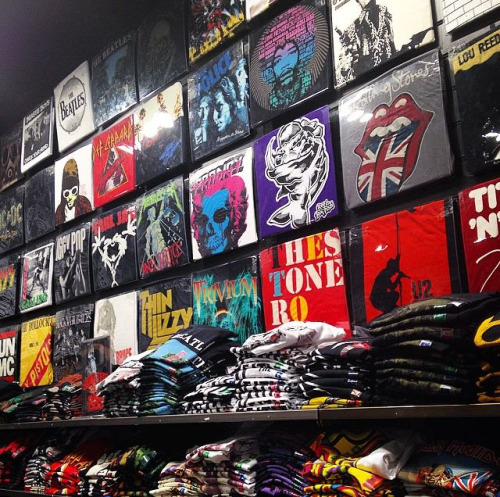
It's New Year's Eve and you've been standing in line for hours waiting to get into the [insert corporate name here] arena. It's been eight long months since you've bought the $500 ticket to see your favorite rock outfit, Justin Bieber and the Looney Tunes. Finally, the doors open. You, your best friend, and that one person who always tags along rush through the doors to get into yet another line, but this one is important. This line is for the merchandise.
When seeing a big-name act such as this, merchandise is overpriced, but an essential part of the experience. It's a rite of passage. It's proof that you were at this monumental event. You'll likely wear the T-shirt from this concert for years until it becomes a tattered shred of its former self. Then, it will be tossed away with minimal thought.
To the average person, merchandise may just be a souvenir of sorts. Even for big-name acts, merchandise is nothing more than a convenient way to promote their brand. For the local musician, however, merchandise means much more.
As you may or may not know, the music industry has taken a nose dive. It's no longer easy to make money selling records. There's far more competition. Plus, technology has made it easier to obtain recordings for free. If a band just starting out wants a chance at profiting, they need to hit the road. That in itself is no easy task, and the payoff isn't anything grand. To supplement income, most bands go the way of merchandise. Even then, that's usually not enough to support the operation.
According to a recent survey, merchandise only accounts for the smallest percentage of income compared to performances, sound recordings, and donations. Don't let the statistics deter you, though. As they say, you have to spend money to make money. Merchandise is a tremendous way to advertise your brand in a creative way. To stir up some wacky ideas, here are five band merchandise products that are so crazy, they actually worked.

 That old adage that "it’s all about who you know" isn't nearly as powerful as how someone knows you. got to know you, though; it’s what happens before the relationship starts and how you carry it on after.